
Narrow Driveway Dumpster Placement in Erie
A lot of Erie's older neighborhoods were built long before anyone worried about parking a construction dumpster — here's how to figure out what will actually fit, and what to do if nothing does.
Erie dumpster guide
Erie's lake-effect snow squalls can bury a driveway in hours. Here's how storm and snow-squall cleanup debris removal actually works, and how we schedule around it.
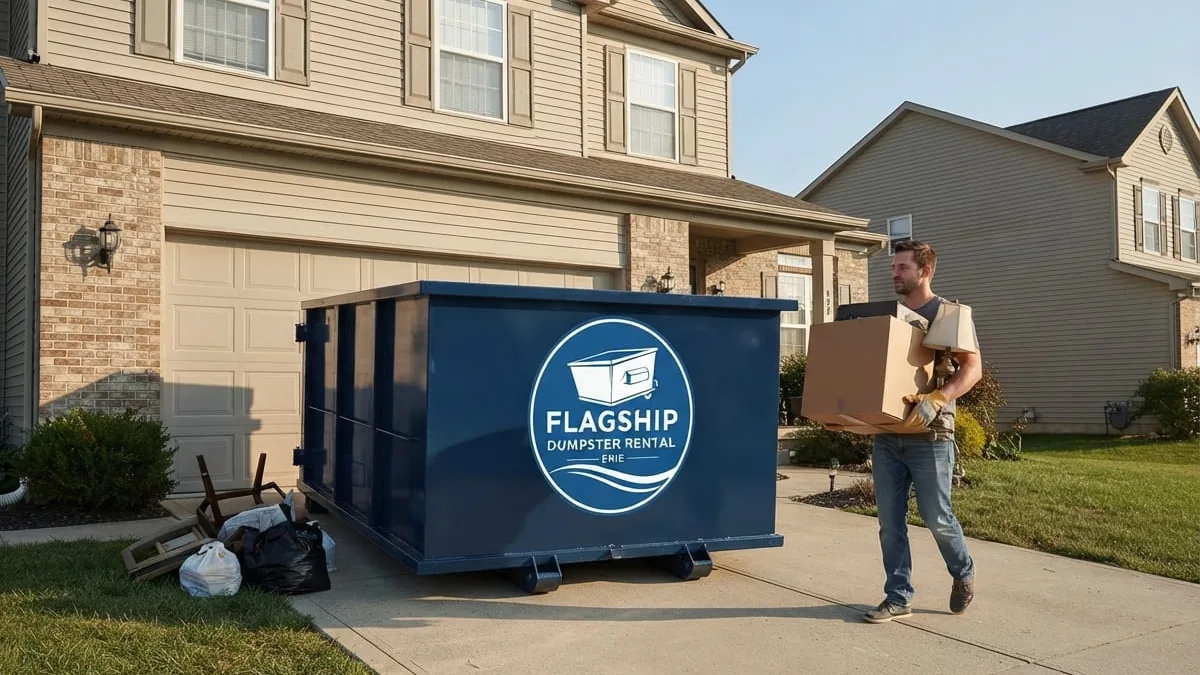
If you have lived in Erie for more than a winter or two, you already know the drill: the sky is clear one hour, and the next hour you cannot see your own mailbox. Lake-effect snow squalls off Lake Erie are not the same thing as a regular snowstorm, and they leave behind a different kind of cleanup job. At Flagship Dumpster Rental Erie, we have been hauling storm and snow-squall debris out of driveways and yards since 2016, and this guide covers what actually needs a dumpster after one of these events and how we schedule around them.
A typical winter storm builds gradually and gives you hours of warning. A lake-effect squall off Lake Erie can spin up in a narrow band, drop a foot or more of snow in a matter of hours, and bring visibility down to near zero — then move on just as fast. That sudden, hyper-localized intensity is exactly why Erie is regularly ranked among the snowiest cities in the country. It is not that we get more snow every single day than other northern cities; it is that the lake can deliver an entire winter's worth of accumulation in one violent burst.
The clearest example is Christmas week 2017, when a series of lake-effect squalls buried Erie under more than 65 inches of snow in about a week — a Pennsylvania state snowfall record that still stands. Roofs that had carried normal snow loads for years suddenly had several feet of wet, heavy snow sitting on them at once. That is the scale we plan for when we talk about storm cleanup here, not hurricanes or tornadoes, which are not really a factor in this part of Pennsylvania.
The mess from a big lake-effect event usually shows up in a few predictable forms:
None of that is exotic material — it is standard construction and yard debris — but the volume after a real squall event is a lot more than a normal cleanup, and that is where a roll-off makes more sense than filling pickup loads by hand. If you are not sure how big a container you need for a mixed roofing-and-yard-debris load, our dumpster size guide walks through it, and the roofing tear-off guide covers roof-specific sizing in more detail.
We will not pretend a truck can safely deliver a container in the middle of a whiteout, and we are not going to promise same-day delivery while a squall is actively burying the roads — that is not honest, and it is not safe for our drivers or your street. When a squall is moving through, deliveries and pickups scheduled for that window may get pushed to later the same day or the next morning once the roads are plowed and visibility comes back.
What we can tell you is that the recovery work ramps up fast right behind the storm. Once the plows have been through and the sun is out, that is when the calls start coming in for roof tear-offs, downed-limb cleanup, and gutted rooms after an ice-dam leak, and we shift crews and containers to keep up with it. Calling us before noon still gives you the best shot at getting a container out the same day once conditions allow it, which is standard practice for us, storm or no storm.
Before a truck can drop a container, the driveway needs to be plowed and reasonably clear — our drivers cannot place a dumpster safely on top of packed snow or ice, and a container sitting on an unplowed surface is a hazard for anyone walking around it. If your driveway is still buried from the squall, plan on getting it cleared first, then call us to schedule delivery. We put boards down under every container we place, standard on every job, which protects the driveway surface once it is clear.
If there simply is not room on your property and a container needs to sit in the street or right-of-way instead, that is a separate conversation — contact the City of Erie Bureau of Streets ahead of time, since street placement involves the city and needs lead time to sort out, especially in winter when plow routes are a factor.
One thing a lot of homeowners do not think about until spring: Erie's freeze-thaw cycle is hard on driveways and concrete slabs. Water works into small cracks, freezes, expands, and widens the crack, and after a winter with several major squalls that cycle repeats over and over. If you end up replacing a cracked driveway or slab once the weather breaks, that is heavy debris, not household trash, and it needs to be handled as such. Our concrete and heavy debris service and our 15-yard or 20-yard dumpster sizes are the usual fit for a driveway or small slab tear-out, depending on the square footage.
We have been doing this out of our yard at 1600 Cranberry St in Erie since 2016, and owner Rob Kaminski has seen enough Erie winters to know that storm cleanup is not a once-a-year event here — it is a recurring part of owning property near the lake. Households in Harborcreek and Millcreek call us after almost every major squall for the same mix of roofing, limb, and water-damage debris described above, and flat-rate pricing means you are not guessing at what a storm cleanup dumpster will cost on top of everything else that week.
If you have storm or snow-squall damage to clean up, call (814) 240-4177 and we will help you figure out the right container size and a realistic delivery window. You can also check our full services list or contact us to get a container scheduled.
FAQs
Not while the squall is actively moving through — safety comes first for our drivers and for your street. Deliveries and pickups scheduled during an active squall may be pushed a few hours or to the next morning once roads are plowed and visibility clears. Recovery work ramps up quickly right behind the storm, so calling us as soon as conditions allow still gets you scheduled fast.
Storm-damaged shingles and gutters, downed tree limbs and brush from snow load, and water-damaged drywall, insulation, or flooring from an ice-dam leak are all common loads after a squall. See our roofing dumpster rental and yard waste removal pages for how each is typically handled.
Yes — wet shingles, soaked insulation, and snow-covered limbs are normal winter loads for us. Keep in mind that wet material is heavier than the same material dry, so it can push a load closer to its tonnage allowance faster than a dry summer cleanup would.
We need a reasonably clear, plowed surface to place a container safely and to protect your driveway with the boards we put under every dumpster. If your driveway is still buried after a squall, get it plowed first and then call us to schedule delivery.
It depends on what the storm damaged. A small roof leak with some drywall and insulation often fits a 15-yard dumpster, while a full roof tear-off or a driveway slab replacement after freeze-thaw cracking usually needs a 20-yard dumpster or larger. Call (814) 240-4177 and describe the damage and we will size it with you.
Ready when you are
Call and you will speak to someone local who knows the streets, the permit rules and which box actually fits your driveway. Flat rate quoted up front.
Keep reading
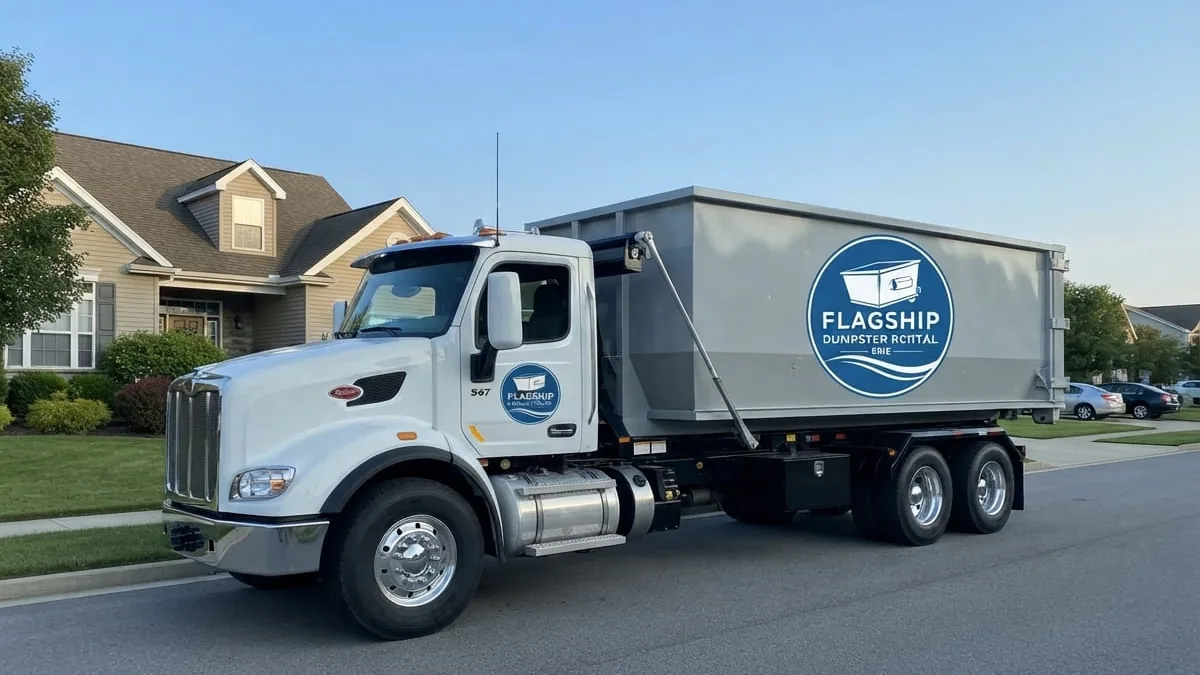
A lot of Erie's older neighborhoods were built long before anyone worried about parking a construction dumpster — here's how to figure out what will actually fit, and what to do if nothing does.
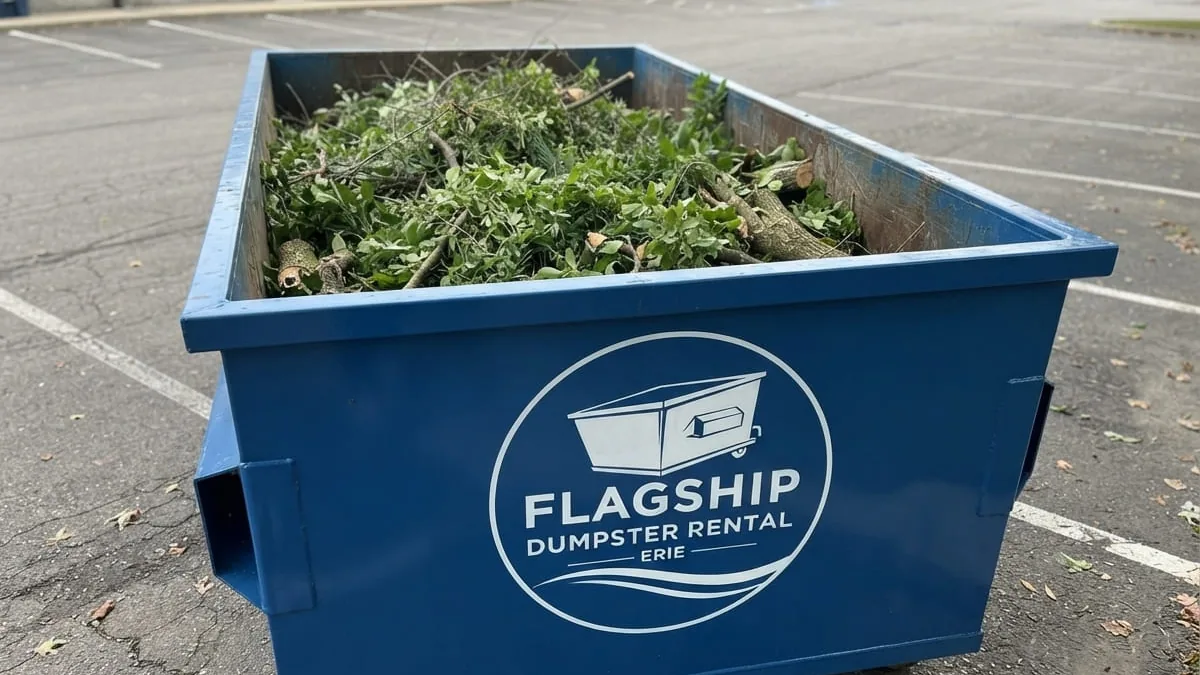
Curbside bins, e-waste bans, yard waste, and household hazardous stuff — here's how recycling and disposal really work in Erie County, and where a dumpster fits in.
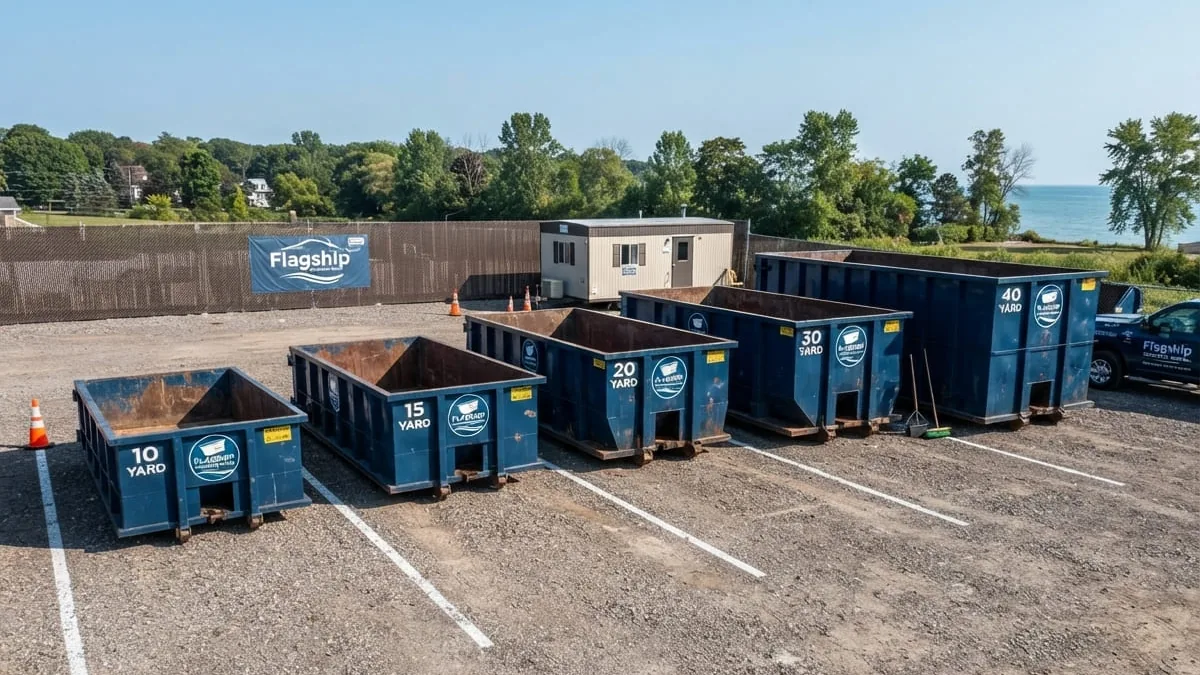
Guessing at dumpster size costs you money either way — too small and you pay for a second haul, too big and you overpaid for space you never filled. Here's how sizing actually works in Erie, plus a size-by-size breakdown.