
30 Cubic Yards
30 Yard Dumpster Rental in Erie, PA
22x8x6 feet, about 9 pickup truck loads and a 4-5 ton allowance — sized for a major renovation, a new-build job site, a full estate cleanout, or a demolition. One flat rate, delivered on driveway boards.
- 30 ydCapacity
- 9 pickup-truck loadsPickup loads
- 4–5 tonsWeight allowance
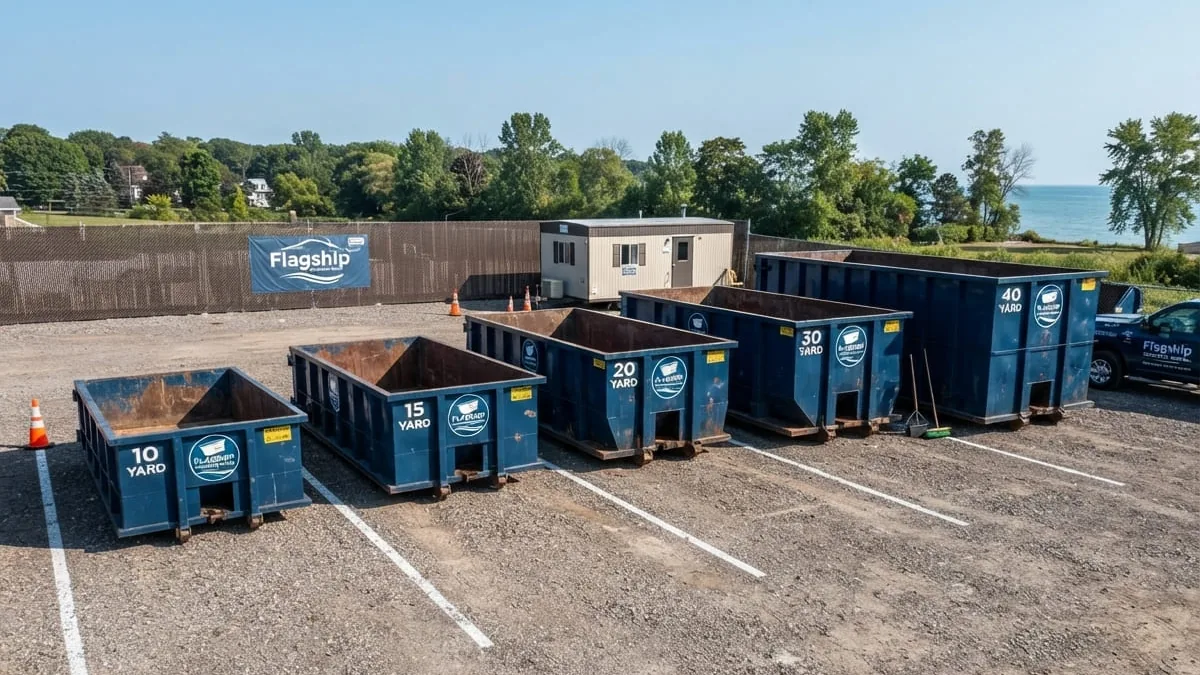
The 30 yard is the size we bring out when a job is too big to argue about it — a gut renovation that's down to the studs, a new home going up, a demolition, or an estate that's being cleared room by room after decades of accumulation. It's 22 feet long, 8 feet wide, and 6 feet tall, which is two feet taller than our 20 yard, and it holds roughly 9 pickup truck loads on a 4 to 5 ton allowance. That extra wall height is what makes it work for bulky framing lumber, drywall, and mixed demo debris without topping out halfway through the job.
We own our own trucks and deliver flat rate — one number over the phone that covers delivery, the rental period, the tonnage allowance, and pickup. Call before noon and we can usually get one to you the same day. Every container goes down on protective boards, standard, no upcharge, because a 30 yard loaded down is heavy and we're not going to leave marks in your driveway to save five minutes.
What fits in a 30 yard dumpster
- 22 x 8 x 6 ft — holds about 9 pickup truck loads on a 4 to 5 ton allowance
- Sized for major renovations, gut jobs, and whole-house demolition
- Standard size for new-construction sites during framing and rough-in
- Handles full estate cleanouts, including older Erie and Bayfront homes
- One flat rate by phone — delivery, rental period, tonnage, and pickup
- Same-day delivery across Erie County when you call before noon
- Driveway boards under every container, standard, no upcharge
- Owner-operated — our own trucks, not a broker dispatching someone else
Dimensions, footprint and truck clearance
A 30 yard container measures 22 feet long, 8 feet wide, and 6 feet tall. The length and width match our 20 yard exactly — it's the extra wall height, 6 feet instead of 4.5, that adds the capacity. That taller wall means you can pile bulkier material higher before you're pushing the tonnage limit, which matters on renovation and demolition jobs where framing, drywall, and mixed debris don't stack flat the way a clean-out load does.
| Size | Dimensions (L x W x H) | Capacity | Weight Allowance |
|---|---|---|---|
| 20 Yard | 22 x 8 x 4.5 ft | ~6 pickup loads | 3–4 tons |
| 30 Yard | 22 x 8 x 6 ft | ~9 pickup loads | 4–5 tons |
| 40 Yard | 22 x 8 x 8 ft | ~12 pickup loads | 5–6 tons |
Because the footprint is the same as a 20 yard but the container sits taller, our delivery truck needs a longer, flatter approach to set it down and roll it off cleanly — figure roughly the length of the container plus extra room behind it for the truck to back in and cable it down. Overhead clearance matters too on a taller container, so mention low tree branches, wires, or a carport when you call. If your driveway is short or the approach is tight, tell us and we'll figure out the best placement, or talk through whether a 20 yard makes more sense instead. See the full lineup on our dumpster sizes page.
Why it fits major renovations and new construction
A 30 yard is the standard size for a job that generates volume on a schedule — framing offcuts and packaging on a new build, or drywall, plaster, cabinetry, and old flooring coming out of a full gut renovation. It's also the size most demolition jobs call for, whether that's a garage, an outbuilding, or a full structure coming down. The extra height means fewer swap-outs mid-project, which keeps the job site moving instead of waiting on a truck.
For a mid-size remodel or a single large room, our 20 yard dumpster is often enough. Once you're talking about a whole-house gut, new construction, or teardown debris, the 30 yard is the size we recommend most. Our construction dumpster rental and demolition debris pages go into more detail on how we handle those jobs specifically.
New construction growth areas and estate cleanouts
We see two different kinds of 30 yard jobs regularly, and they come from opposite ends of the county. Out toward Fairview and Girard, where new-home construction has been steady, builders and general contractors call us for a 30 yard to sit on site through framing and rough-in, handling packaging, offcuts, and construction debris until the job's closer to finished. Closer to downtown Erie and the Bayfront, where the housing stock is older, a 30 yard is more often an estate cleanout — a house that's been lived in for 40 or 50 years, cleared out top to bottom for a sale or a family settling an estate. Furniture, appliances, decades of belongings, and sometimes garage or basement contents that never got sorted along the way.
If that older Erie or Bayfront property involves any renovation work — not just clearing out belongings, but pulling up flooring or opening walls — keep in mind that pre-1978 homes can raise lead paint or asbestos considerations once you start disturbing plaster or old adhesive. That's a job for a licensed abatement contractor first; once that material is cleared, we're glad to take the rest. Our estate cleanout page covers how we typically handle those jobs from start to finish.
When a 30 yard is the wrong size
If your project is a single-room remodel, a basement or garage cleanout, or a moderate roof tear-off, a 30 yard is usually more container than you need — our 20 yard dumpster or even the 15 yard dumpster will get the job done for less and take up less of your driveway. On the other end, if you're clearing a large commercial space, running a big teardown, or doing roofing at scale across multiple buildings, the 40 yard dumpster holds more volume and means fewer swaps.
One thing to watch on any 30 yard load, regardless of the project: dense material like concrete, brick, dirt, or shingles fills the tonnage allowance fast even though the container looks nowhere near full. If your job is mostly heavy debris rather than bulky-but-light material, tell us when you call — a smaller container built for heavy loads is often the better and cheaper choice. Our concrete and heavy debris page covers that distinction.
Placement in Erie
A loaded 30 yard is a lot of weight, so we need a long, clear, and reasonably level approach to set it down without tearing up your yard or scraping a garage door. A straight driveway with room for our truck to back in and cable the container down works best; if there's a tight turn, low overhead wires, or limited backing room, mention it when you call and we'll plan around it. Every container we deliver, 30 yard included, goes down on protective boards as standard — not an upsell — because that's what keeps the steel rails from marking up your concrete or asphalt.
That protection matters more here than on our smaller sizes, because Erie's winters are hard on driveways. Lake-effect snow squalls off Lake Erie can dump a foot or more in a few hours with visibility near zero, and we watch the forecast closely and will call ahead if a delivery needs to shift around one. Beyond the snow itself, Erie's long winters put driveways and slabs through repeated freeze-thaw cycles year after year, which is exactly the kind of surface a heavy container needs boards under it to protect. If you're not sure your driveway can handle a 30 yard, ask us when you call — we place them across Erie County regularly and can usually work out a plan that fits your property.
Local fit
The 30 yard in Erie driveways
Placing a container on your own driveway or property generally doesn’t require a permit from the City of Erie. Because a 30 yard needs a longer approach, a tight lot or a job site without driveway room sometimes means the container has to sit in the street or public right-of-way instead — that requires contacting the City of Erie Bureau of Streets ahead of time, so give it some lead time rather than assuming same-day approval. New construction and major renovation projects also typically need a building permit through the City’s Permits & Planning office, which is a separate process from arranging the dumpster itself.
On a demolition or new-build job, a lot of what fills a 30 yard is construction debris rather than household trash, and Pennsylvania’s waste rules still apply — electronics like TVs, computers, and monitors are banned from landfill disposal statewide under the Covered Device Recycling Act, so those need to go to an electronics recycler, not the container. The PA DEP Municipal Waste Program and PA DEP Disposal Info pages cover general rules on what can be landfilled in Pennsylvania, and Erie County Recycling is the local resource for what's handled through recycling rather than a dumpster.
Not sure?
Compare the other sizes
Sizing up costs you money you did not need to spend. Sizing down costs you a second haul. Here is the rest of the range.
10 Yard Dumpster
Small bathroom gut, single-room cleanout, concrete and dirt, garage purge
View 10 yard 15Cubic yards15 Yard Dumpster
Kitchen remodel, basement cleanout, small roof tear-off, deck removal
View 15 yard 20Cubic yards20 Yard Dumpster
Whole-house cleanout, larger remodel, 20–30 square roof, flooring
View 20 yard 40Cubic yards40 Yard Dumpster
Commercial fit-out, large-volume light debris, teardown, roofing at scale
View 40 yardFAQs
30 Yard dumpster questions
What fits in a 30 yard dumpster?
A 30 yard is built for major projects — a full gut renovation, new construction debris, demolition material, or a whole-house estate cleanout. At 22 x 8 x 6 feet, it holds roughly 9 pickup truck loads with a 4 to 5 ton allowance, enough capacity that most single-family renovation or demolition jobs fit in one container.
How much driveway space does a 30 yard dumpster need?
The footprint is the same 22 by 8 feet as our 20 yard, but because it sits taller and holds more weight, our truck needs a longer, clearer approach to back in and set it down safely. A straight driveway with some extra room behind the container works best. If your access is tight, mention it when you call and we'll plan the placement or talk through whether a smaller size is a better fit.
Is a 30 yard dumpster big enough for a full home demolition?
It depends on the size and construction of the structure — a garage, outbuilding, or smaller home demolition often fits in one 30 yard, while a larger house teardown may need a 40 yard or more than one container. Call us with the details of the structure and we'll help you size it correctly before the job starts.
Can I use a 30 yard dumpster for an estate cleanout?
Yes, a 30 yard is one of our most common sizes for estate cleanouts, especially for a house that's been lived in for decades with a full basement, attic, and garage to clear. If the property is an older home near downtown Erie or the Bayfront and any renovation work is planned alongside the cleanout, keep in mind that pre-1978 homes can raise lead paint or asbestos concerns once walls or flooring are disturbed — that's handled by a licensed abatement contractor, not us.
How fast can I get a 30 yard dumpster delivered in Erie?
Call before noon and we can usually deliver the same day, assuming we have a truck available and your driveway access works for the size. Otherwise we'll get you on the schedule for the next available slot, which is typically the following day.
Will a 30 yard dumpster damage my driveway?
Every container we deliver, including the 30 yard, goes down on protective boards standard, no extra charge. That matters even more with a loaded 30 yard because of the added weight, and it's especially important in Erie where driveways already take a beating from repeated freeze-thaw cycles over our long winters.
Ready when you are
Reserve a 30 yard dumpster in Erie
Call and you will speak to someone local who knows the streets, the permit rules and which box actually fits your driveway. Flat rate quoted up front.