
What Drives Dumpster Rental Cost in Erie, PA
There's no such thing as a one-size-fits-all dumpster price. Here's what actually moves the number up or down in Erie, and why we quote it as one flat rate instead of a pile of fees.
Erie dumpster guide
Guessing at dumpster size costs you money either way — too small and you pay for a second haul, too big and you overpaid for space you never filled. Here's how sizing actually works in Erie, plus a size-by-size breakdown.
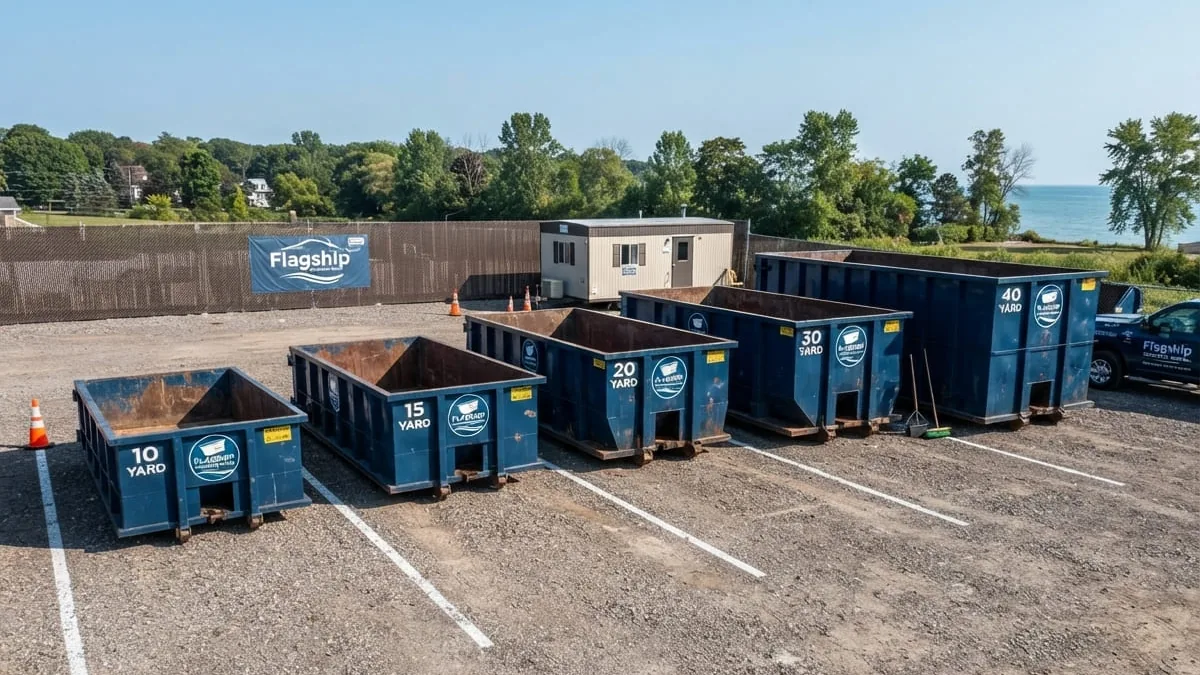
"What size dumpster do I need?" is the first question almost every caller asks us, and it's a fair one — nobody wants to pay for a 30-yard container to clean out a bathroom, and nobody wants to fill a 10-yard box in twenty minutes and still have half a garage left to haul. The honest answer is that sizing depends on two things most people never think about until they're standing in front of a full dumpster: how much space your debris takes up, and how much it weighs. Get either one wrong and you either pay for room you didn't use or run into an overage charge you didn't expect.
Dumpster sizes are measured in cubic yards — length × width × height, essentially. A "20-yard" container holds 20 cubic yards of material. That's the volume side of the equation, and it's the one most people picture when they think about size.
The second side is weight. Every rental comes with a tonnage allowance included in the flat rate, and it's tied to the size you book. A 10-yard container might hold 1–2 tons before you're into overage territory, while a 40-yard box is built for 5–6 tons. For light, bulky debris — furniture, old drywall, general household junk — you'll almost always run out of room before you run out of weight allowance. For dense material like concrete, brick, dirt, or roofing shingles, it's usually the opposite: you'll hit the weight limit while the container still looks half-empty. Knowing which situation you're in matters more than picking the biggest box available.
We run five container sizes out of our yard on Cranberry St, and each one is sized for a different scope of project:
| Size | Dimensions | Capacity | Typical Weight | Good For |
|---|---|---|---|---|
| 10-Yard | 12 ft × 8 ft × 3.5 ft | ~3 pickup-truck loads | 1–2 tons | Small bathroom gut, single-room cleanout, concrete or dirt in small quantity, garage purge |
| 15-Yard | 16 ft × 8 ft × 4 ft | ~4–5 pickup-truck loads | 2–3 tons | Kitchen remodel, basement cleanout, small roof tear-off, deck removal |
| 20-Yard | 22 ft × 8 ft × 4.5 ft | ~6 pickup-truck loads | 3–4 tons | Whole-house cleanout, larger remodel, 20–30 square roof, flooring tear-out |
| 30-Yard | 22 ft × 8 ft × 6 ft | ~9 pickup-truck loads | 4–5 tons | Major renovation, new-build construction debris, estate cleanout, demolition |
| 40-Yard | 22 ft × 8 ft × 8 ft | ~12 pickup-truck loads | 5–6 tons | Commercial fit-out, large-volume light debris, teardown, roofing at scale |
If you're between two sizes, we generally tell people to size up rather than down — a half-full 20-yard costs less trouble than a completely full 15-yard that can't take the last load off your driveway. That said, for heavy material the math flips, which brings us to the part people underestimate most.
This is the mistake we see most often: someone books a big container thinking bigger is safer, fills it a third of the way with concrete, old tile, or wet demolition debris, and gets hit with an overage charge because they blew past the tonnage allowance long before the box was visually full. Concrete, brick, plaster, dirt, and shingles are dense — a load that looks small can weigh more than a whole 20-yard container of furniture and cardboard.
For pure concrete, block, dirt, or brick, a smaller container built around that weight allowance is usually the smarter and cheaper call, not the bigger one. If your project mixes heavy material with lighter debris — say a kitchen remodel with some old tile and cabinetry — tell us both when you call so we can size around the weight, not just the volume. This is exactly the kind of thing our concrete and heavy debris service and demolition debris service are built to sort out ahead of time so you're not guessing.
Size isn't only about the project — it's also about where the container is going to sit. A lot of driveways in Erie's older neighborhoods, especially closer to downtown and the Bayfront, are narrower and shorter than what newer subdivisions have, which can limit how long a container we can comfortably place without hanging into the sidewalk or street. We'll ask about your driveway width and length when you call so we're not showing up with a 40-yard box that doesn't fit.
Erie's winters add another wrinkle. Freeze-thaw cycles are hard on asphalt and concrete driveways over the years, and a loaded container is heavy — that's part of why we put driveway boards under every dumpster we drop, standard, no upcharge. It protects your surface whether it's July or the middle of a lake-effect snow squall. If you're planning a winter job, keep in mind that a container needs a spot that can be plowed around, and lead time matters more when snow is in the forecast. Either way, if there's any chance the container needs to sit in the street rather than on your property, that's a right-of-way matter for the City of Erie Bureau of Streets, and it's worth checking with them before delivery day, not after.
We deliver all over Erie County — Millcreek, Harborcreek, and Wesleyville are core parts of our service area, along with the rest of the county — and driveway layouts vary block to block even within one town, which is exactly why we'd rather talk it through with you than have you guess off a chart alone.
Charts and tables get you close, but they can't see your driveway, your pile, or what's actually in it. If you're unsure, the fastest path to the right size is to call (814) 240-4177 and describe the project — square footage, what's coming out, whether it's heavy material or bulky-and-light, and where the container needs to sit. We've been doing this in Erie since 2016, and most of the time we can size a job correctly over the phone in a couple of minutes. Call before noon and we can usually get a container to you the same day.
Whether you're clearing out a single room or tearing down a structure, we'd rather size it right the first time than have you pay twice. Reach out through our contact page or give us a call, and we'll help you land on the right container before it ever shows up on your driveway.
FAQs
For bulky, lightweight debris — furniture, drywall, general household junk — sizing up a step is usually the safer call, since running out of room means a second trip. For dense material like concrete, dirt, or shingles, sizing up doesn't help much because you'll hit the weight allowance before the extra volume ever gets used, so a smaller container built around that weight limit is often the better and cheaper choice.
You can, but it changes the sizing math. Mixing dense material with lighter debris means the container will hit its tonnage allowance well before it looks full. Tell us about both when you call so we can recommend a size that accounts for the weight, not just the volume — our concrete and heavy debris team deals with this combination often.
Not always. Driveways closer to downtown Erie and older parts of the county tend to be shorter and narrower than newer subdivisions, and a 22-foot-long container needs room to sit fully on your property without blocking the sidewalk or street. Tell us your driveway's approximate length and width when you call and we'll recommend a size that actually fits, or talk through placement options.
Size itself doesn't change with the season, but placement and timing do. Lake-effect snow squalls can bury a driveway fast, so during winter months we recommend booking with a little extra lead time and picking a spot that can still be plowed around once the container is down. We put driveway boards under every dumpster year-round to protect the surface from the weight, snow or no snow.
Ready when you are
Call and you will speak to someone local who knows the streets, the permit rules and which box actually fits your driveway. Flat rate quoted up front.
Keep reading

There's no such thing as a one-size-fits-all dumpster price. Here's what actually moves the number up or down in Erie, and why we quote it as one flat rate instead of a pile of fees.
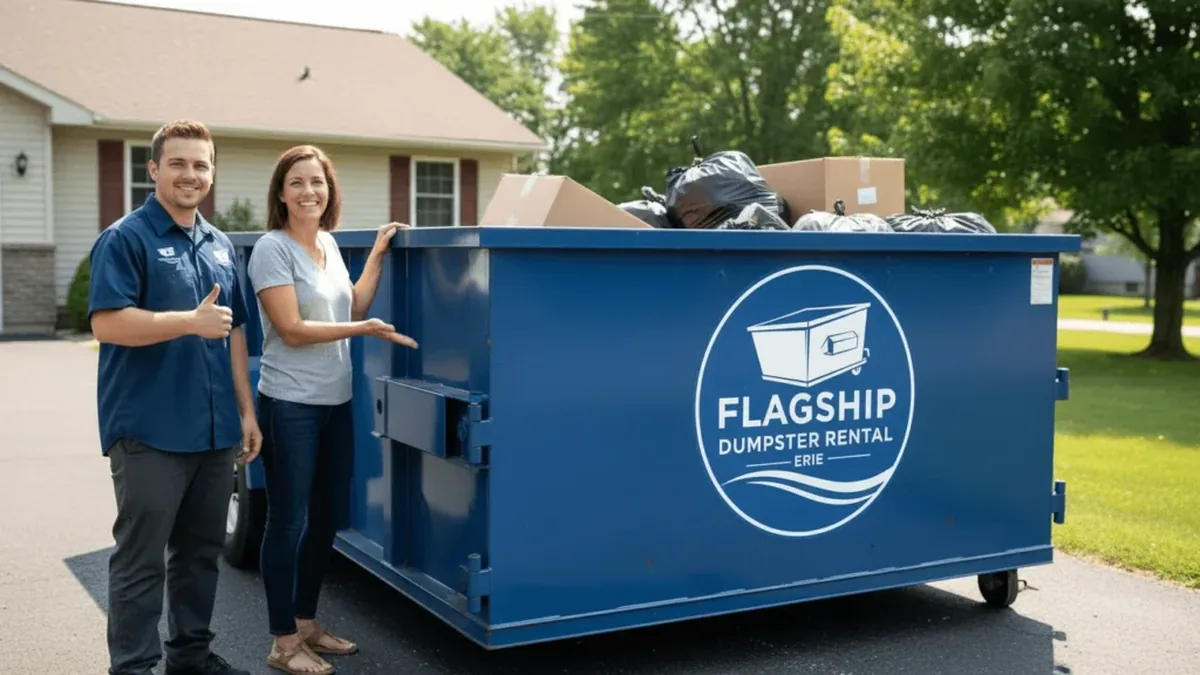
A plain-English rundown of what's allowed in a roll-off dumpster in Pennsylvania and what state law keeps out — electronics, asbestos, yard waste, and more.
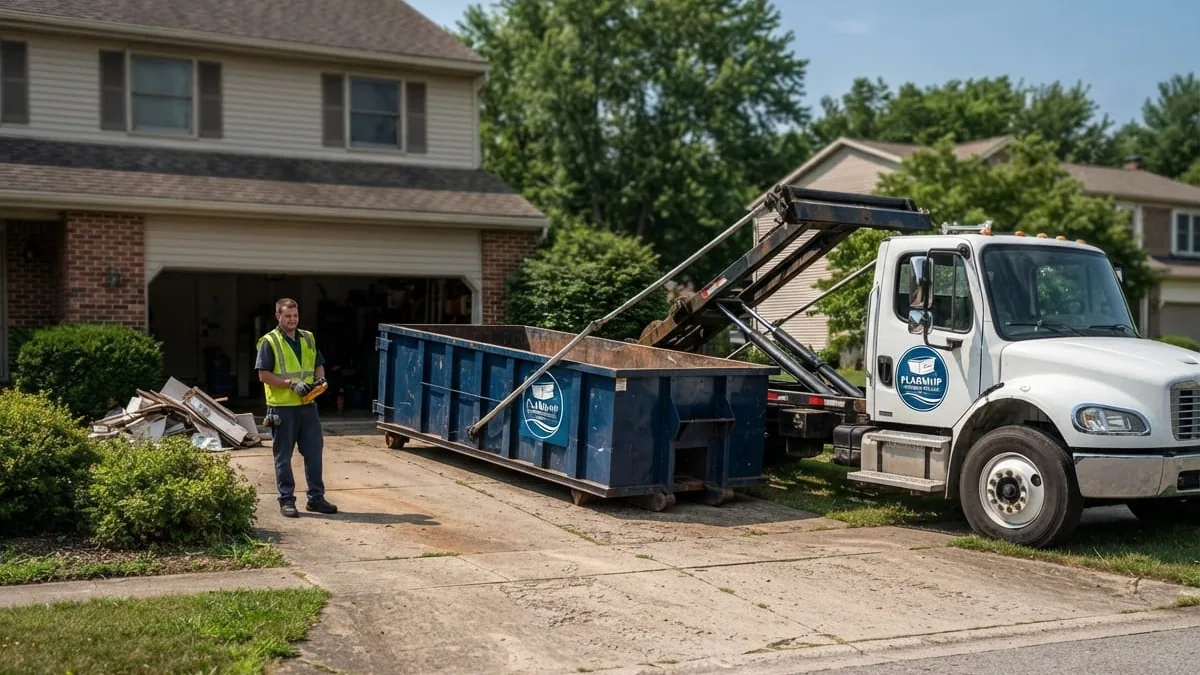
A straight answer on dumpster permits in Erie and Erie County — when you're fine on your own property, and when to make a call before we deliver.