
Erie County Recycling Guide: What Actually Goes Where
Curbside bins, e-waste bans, yard waste, and household hazardous stuff — here's how recycling and disposal really work in Erie County, and where a dumpster fits in.
Erie dumpster guide
A lot of Erie's older neighborhoods were built long before anyone worried about parking a construction dumpster — here's how to figure out what will actually fit, and what to do if nothing does.
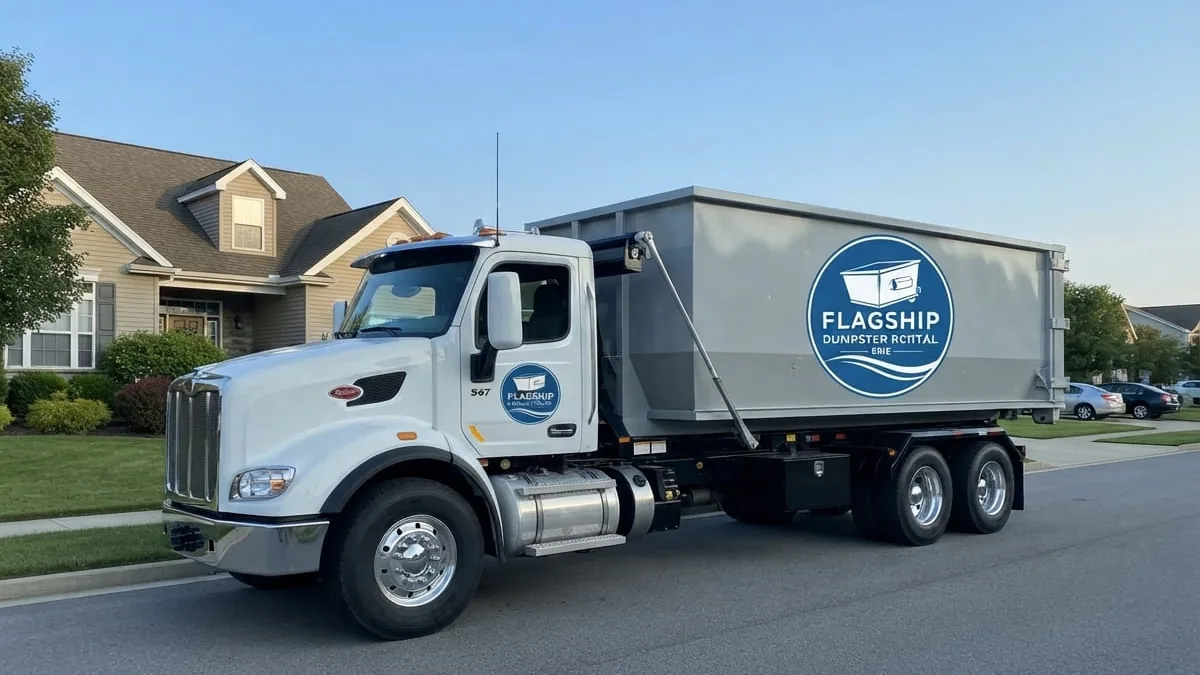
Every week or so I get a call from someone in one of Erie's older neighborhoods who's already had one dumpster company tell them “we can't get in there.” Most of the time we can — it just takes a little planning up front instead of showing up with a truck and hoping for the best. If your driveway is narrow, short, or squeezed between a fence and the neighbor's hedge, this guide walks through how we figure out what fits before we ever load a container on the truck.
A lot of the housing stock near downtown Erie and the Bayfront was built decades before anyone designed a driveway around a 22-foot roll-off container, or even a two-car garage. Lots were platted narrow, driveways were poured for a single sedan, and in many cases the gap between the house and the property line was never meant to carry heavy equipment at all. Older boroughs like Wesleyville and Lawrence Park have a lot of this same older housing stock — smaller lots, narrower drives, and mature trees that were planted long before anyone thought about overhead clearance. Compare that to a newer subdivision in Millcreek or Harborcreek, where driveways were poured wide enough for two vehicles side by side from the start, and it's easy to see why the same size dumpster that drops easily on one street can be a tight squeeze two miles away.
None of this means a narrow driveway is a dead end. It just means we need real numbers before the truck leaves the yard, not a guess.
Our drivers are good at threading a container into a tight spot, but they can't work with information we don't have. Before you call, grab a tape measure and get three numbers:
Give us those three numbers when you call and we can usually tell you on the spot what will fit, rather than sending a truck out to find out the hard way.
For most tight residential driveways, we're steering customers toward our smaller containers:
Both of these sit at the same 8-foot width, so the deciding factor is almost always length and how much room the truck has to swing in and set the container down level. If your drive can handle a 10 or 15 yard, it usually can't handle a 20, 30, or 40 — those larger containers need real width and a longer straight approach, and we'll tell you that honestly on the phone rather than let a truck get halfway up your driveway and find out.
Some companies charge extra for driveway protection or skip it entirely. We don't. Every container we set on a driveway goes down on protective boards first — it's standard on every job, not an upsell. That layer spreads the weight of a loaded container across the boards instead of concentrating it on a few square feet of concrete or asphalt, which matters even more when the drive is narrow and the container has less margin for error on where it sits.
Erie gets some of the heaviest lake-effect snow in the country, and the freeze-thaw cycle that comes with a long Erie winter is tough on driveways, especially older concrete and asphalt that's already seen forty or fifty years of it. Water gets into hairline cracks, freezes, expands, and widens them a little more every winter. If your driveway already has visible cracking, heaving, or a soft spot, tell us when you call. We may recommend a slightly smaller container, a different spot on the property, or extra board coverage over the weak area so the weight of a loaded dumpster doesn't turn a small crack into a bigger repair bill.
Every so often, a driveway is narrow enough, short enough, or sits at an angle that just won't accept a container safely, even a 10 yard. When that happens, the fallback is placing the container in the street or public right-of-way instead of on your property. That's not something we do automatically — it requires a permit conversation first. We've put together a full breakdown of how that process works, including who to contact, in our Erie dumpster permit guide. Placement on your own driveway generally doesn't require a permit, but street placement does, and it needs lead time, so it's worth raising early rather than the day before your project starts.
We're a call-first business on purpose — a quick phone call with real measurements in hand lets us tell you what fits, what size makes sense, and whether we need a plan B before a truck ever leaves 1600 Cranberry St. It's a lot easier to solve a narrow-driveway problem over the phone than to have a driver stuck in a spot that turns out to be six inches too tight. Call us at (814) 240-4177 with your width, approach length, and overhead clearance, and we'll tell you straight whether a 10 yard, a 15 yard, or a street placement is the right call for your property.
FAQs
It depends on the container size and the shape of the approach, not just the width number by itself. Give us your narrowest point, the approach length, and overhead clearance, and we can tell you on the phone whether a 10 yard dumpster or 15 yard dumpster will fit before we send a truck out.
No. Driveway boards go under every container we place on a driveway as standard practice, not as an add-on charge. It's built into our flat-rate pricing whether your drive is wide and modern or narrow and older.
A loaded container is heavy, and any driveway that's already weakened — often from years of Erie's freeze-thaw winters working cracks wider — is more at risk than a newer, solid surface. Boards under the container spread that weight out, and if you tell us about existing cracks or soft spots when you call, we can plan placement around them.
If nothing on your property will safely fit a container, the fallback is placing it in the street or public right-of-way. That requires a permit conversation with the City of Erie first, and we walk through exactly how that works in our Erie dumpster permit guide.
A phone estimate works best when you've got real numbers — width at the narrowest point, approach length, and overhead clearance. It only takes a few minutes with a tape measure, and it's the fastest way to avoid a wasted delivery trip if the space turns out to be tighter than it looks.
Ready when you are
Call and you will speak to someone local who knows the streets, the permit rules and which box actually fits your driveway. Flat rate quoted up front.
Keep reading
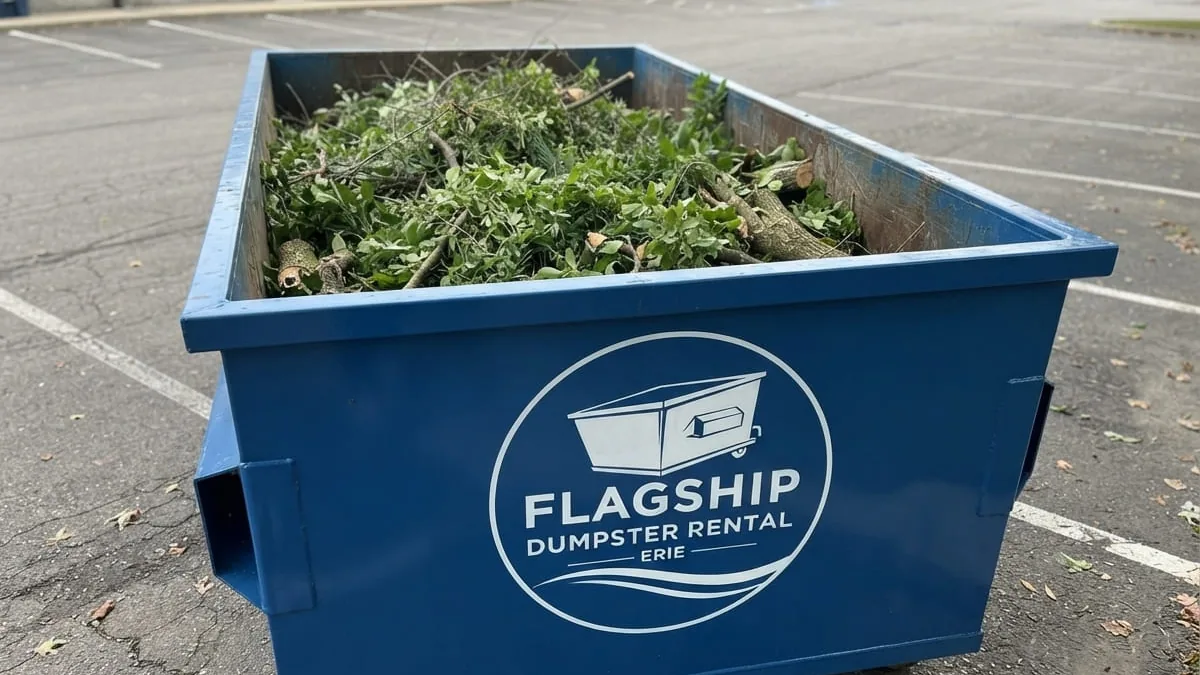
Curbside bins, e-waste bans, yard waste, and household hazardous stuff — here's how recycling and disposal really work in Erie County, and where a dumpster fits in.
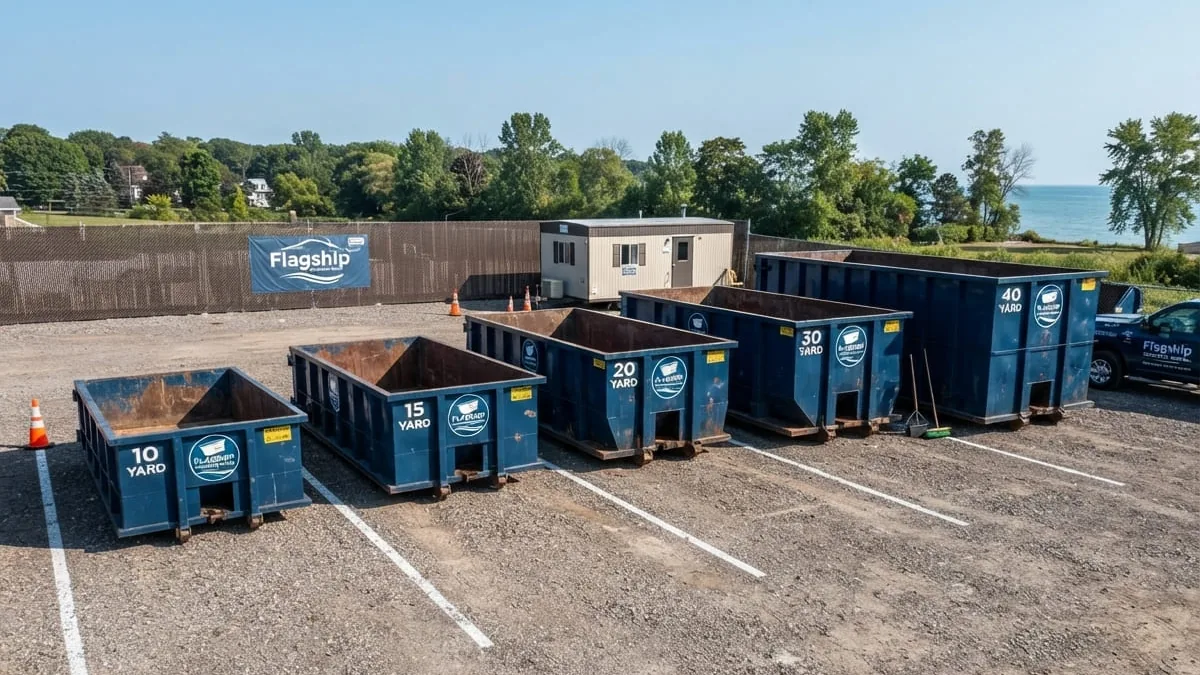
Guessing at dumpster size costs you money either way — too small and you pay for a second haul, too big and you overpaid for space you never filled. Here's how sizing actually works in Erie, plus a size-by-size breakdown.

There's no such thing as a one-size-fits-all dumpster price. Here's what actually moves the number up or down in Erie, and why we quote it as one flat rate instead of a pile of fees.