
Erie, PA
Concrete & Heavy Debris Dumpster Rental in Erie
Flat-rate 10 and 15-yard containers built for the weight of concrete, brick, block, dirt, and asphalt — not just the volume.
- Same dayDelivery available
- Flat rateQuoted up front
- Since 2016Locally owned
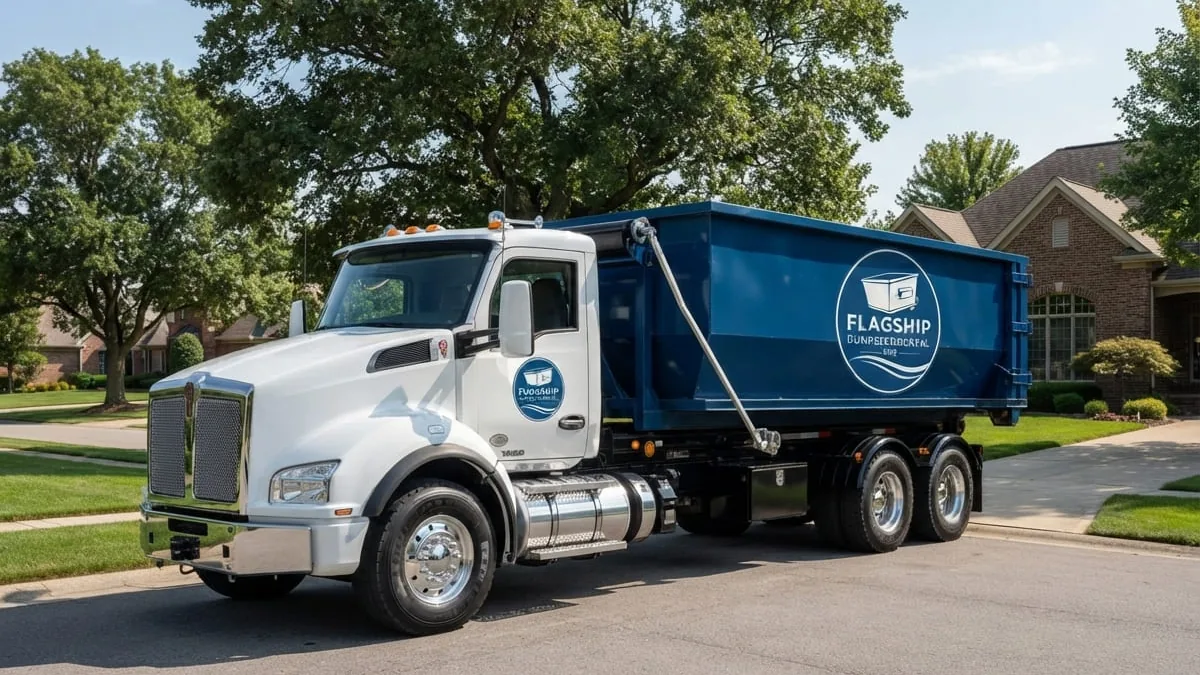
Concrete and other heavy debris play by different rules than a normal cleanout. A 20-yard box that would easily swallow a garage full of junk can hit its weight limit with a broken driveway slab still stacked below the rails. That's why we don't just ask how big your pile looks — we ask what it's made of, then put you in a container sized for the tonnage, not the empty space.
Flagship Dumpster Rental has been doing this in Erie since 2016. Owner Rob Kaminski runs his own trucks out of the yard on Cranberry Street, so when you call about a driveway tear-out or a foundation repair, you're talking to the people who will actually deliver and haul the box — not a broker reading a script. One flat price covers delivery, the rental period, a weight allowance sized for heavy material, and pickup. Call (814) 240-4177 before noon and most Erie-area heavy debris jobs go out the same day.
What we handle on concrete & heavy debris jobs
- Flat-rate pricing that includes a weight allowance sized for concrete, brick, block, dirt, or asphalt
- Right-sized 10 and 15-yard containers — you're not paying to hold empty air
- Owner-operated: Rob Kaminski's own trucks and drivers, not a brokered third party
- Driveway boards under every container, standard, to protect the surface underneath
- Same-day delivery across Erie and Erie County when you call before noon
- Straight talk about tonnage before the truck ever leaves the yard on Cranberry Street
- Ten years handling driveway, patio, and foundation tear-outs across Erie
- Serving Millcreek, Harborcreek, Fairview, and towns throughout Erie County
Why Heavy Debris Needs a Smaller Container
Every roll-off has two limits: how much it can hold and how much it can weigh. For household junk, drywall, or furniture, you almost always run out of room before you run out of weight allowance. Concrete, brick, block, dirt, and asphalt flip that around — they're dense enough that a container can be legally full on tonnage while it still looks half-empty. A 20 or 30-yard box loaded to the rails with broken concrete would put the truck well over what it can safely and legally haul on the road.
That's why heavy material almost always goes in a 10-yard or 15-yard dumpster. You're not losing capacity by going smaller — you're matching the box to what the material actually weighs per cubic foot. Tell us the size of the tear-out when you call and we'll size it correctly the first time.
Where This Debris Usually Comes From
Most concrete and heavy debris calls we get in Erie fall into a handful of jobs: a driveway or patio being torn out and replaced, a foundation or footer repair, a walkway or garage floor removal, or dirt coming out of an excavation. A fair amount of it traces back to Erie's winters — the region gets long, snowy stretches with repeated freeze-thaw cycles, and water that gets into a hairline crack in a slab or driveway and then freezes will widen that crack a little more every winter. After a few years of that, a driveway or patio that looked fine goes from patchable to needing a full tear-out.
We also see clean fill dirt from grading and excavation work, brick and block from an old wall or chimney coming down, and asphalt millings from a driveway resurface. All of it fits the same pattern — heavy, dense, and better suited to a smaller box than a light-debris job of the same visual size.
Keep the Heavy Stuff Separate From Everything Else
If your job also produces lighter debris — old fence boards, a rotted deck, cardboard packaging from new pavers — keep it out of the concrete container if you can. Mixing a full load of dense material with bulky light debris is the fastest way to hit the weight allowance early and get hit with an overage charge for tonnage you didn't need to pay for. A second, larger container for the light stuff, or a quick trip to the curb for anything that can go with regular trash pickup, almost always costs less than one overloaded box.
When you call to book, just describe what's actually coming out of the ground or off the driveway. We'll tell you honestly whether one container covers it or whether splitting the load into a heavy box and a light box makes more financial sense.
Clean Fill vs. Mixed Debris
Concrete, brick, block, and dirt that come out clean — no wood, no trash, no wire mesh or rebar still attached — are generally easier and cheaper to dispose of than a mixed load. Once rebar, adhesive, paint, or other construction debris is mixed in, it typically has to be handled as ordinary construction and demolition debris rather than clean fill, which can affect where it's taken and what it costs. If you can, break up the slab and pull visible rebar and wire mesh out before we arrive, or at least keep it to a minimum — it makes for a cleaner load and a more accurate price.
For a bigger teardown that mixes concrete with framing, roofing, and other building materials, our demolition debris service is usually the better starting point for pricing, since it accounts for that mixed load from the start.
Getting a Loaded Box Out of Your Driveway
A 10 or 15-yard container loaded with concrete or dirt is genuinely heavy, and that changes how the truck needs to approach the pickup. We put driveway boards under every container as standard, on every delivery, to spread the weight and protect the surface underneath — that's not an add-on you have to ask for. What we do need from you is a clear, reasonably level path for the truck to back in and a straight pull back out once it's loaded.
If your own driveway is the thing being torn out, or it's too narrow or too tight to get a loaded box off of safely, the container may need to sit in the street or right-of-way instead. Mention that when you call so we can plan for it — see the local placement notes below.
Right-sized
Which dumpster for concrete & heavy debris in Erie?
We would rather talk you down a size than sell you air. These are the boxes that suit this work.
10 Yard Dumpster Dumpster
The default call for a single-car driveway section, a small patio, a garage floor, or a load of clean dirt. Holds 1-2 tons before the weight allowance is used up.
Size details 15Cubic yards15 Yard Dumpster Dumpster
A step up for a full driveway, a larger patio, or a small foundation or footer job. Rated for 2-3 tons, still small enough to place easily.
Size details 20Cubic yards20 Yard Dumpster Dumpster
Worth a look only when concrete or dirt is mixed with a genuinely large volume of lighter material, such as a driveway tear-out combined with a full landscaping cleanup.
Size detailsLocal knowledge
Concrete & Heavy Debris across Erie and Erie County
If the driveway or a stretch of walkway is what's actually being replaced, there often isn't a good spot for the container on your own property until the new concrete is poured and cured. In that case the box may need to sit in the street or public right-of-way for a stretch of the job. Erie doesn't have a well-publicized fee schedule for that, so the safe move is to contact the City of Erie Bureau of Streets before delivery and give them some lead time, especially on a narrower street. We're happy to help you figure out timing when you call.
Larger teardown or demolition work tied into a concrete removal — taking out an attached structure along with the slab, for example — can also fall under the city's permitting process; the City of Erie Permits & Planning office is the place to check before work starts. We deliver heavy-debris containers throughout Erie County, from Millcreek and Harborcreek driveway jobs to foundation work out toward Fairview.
Towns we cover
We run concrete & heavy debris out of our Cranberry Street yard across Erie and the surrounding suburbs.
FAQs
Concrete & Heavy Debris questions, answered
Can I put concrete, brick, and dirt in the same dumpster?
Generally yes, as long as they come out reasonably clean of trash, wood, and other light debris. Mixing several types of heavy material together is normal — what hurts you is mixing heavy material with a lot of bulky light debris, since that fills the weight allowance faster than the space.
Why did my 10-yard dumpster fill up on weight before it looked full?
Concrete, brick, and dirt are dense. A layer of broken slab a foot or two deep can already be close to the container's tonnage limit even though there's visible room left above it. That's normal for heavy debris and exactly why we size these jobs by weight, not by how big the box looks.
What size dumpster do I need for a driveway tear-out?
Most single driveways fit in a 10-yard container, and a larger or double-wide driveway often calls for a 15-yard. Tell us the approximate square footage and thickness when you call and we'll give you a straight answer rather than guessing on the phone.
Can I combine concrete removal with other renovation debris?
You can, but it usually costs less to keep heavy material in its own smaller container and put lumber, drywall, or roofing in a separate box. If your project is a larger teardown that genuinely mixes structure with concrete, our demolition debris service is built for that combined load.
Does Erie's weather actually crack driveways and slabs that much?
It's one of the more common reasons we get called out here. Erie gets long, snowy winters off Lake Erie, and repeated freeze-thaw cycles work on any crack that's already in a slab or driveway, widening it a little more each season until a patch job stops being realistic.
Will the dumpster need to sit in the street during my driveway job?
If your driveway is the thing being replaced, there may not be anywhere else to put it for part of the job. We can place it in the street or right-of-way when needed, but let us know ahead of time — we'll contact the City of Erie Bureau of Streets and plan around it rather than surprising you on delivery day.
Ready when you are
Book concrete & heavy debris in Erie
Call and you will speak to someone local who knows the streets, the permit rules and which box actually fits your driveway. Flat rate quoted up front.
Keep going
Related services
Construction Dumpster Rental
Jobsite containers and swap-outs that keep trades moving on schedule, storm season included.
View serviceSame-Day Dumpster Rental
Call before noon and we will do everything we can to get a box to you today.
View serviceRoll-Off Dumpster Rental
10 to 40 yard roll-off containers delivered across Erie and the surrounding metro.
View service