
Estate Cleanout Checklist for Erie, PA
A practical, room-by-room checklist for estate cleanouts in Erie — sorting valuables, setting aside donations, handling hazardous items and electronics, and sizing the right dumpster.
Erie dumpster guide
What actually fills a construction dumpster, how PA DEP rules apply, and how to size your container for every phase of an Erie build — from site prep to final finish.
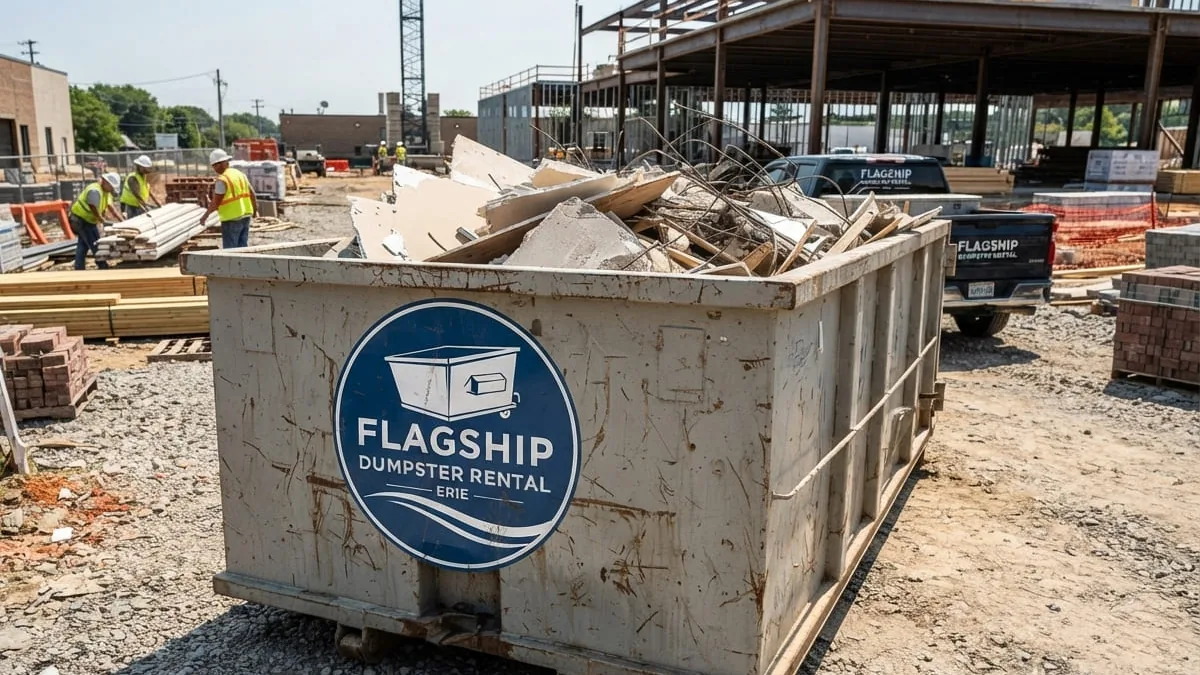
Ask most homeowners what goes in a "construction dumpster" and they picture a pile of two-by-fours. Contractors know better. A typical Erie job produces a mix of framing lumber, drywall scraps, roofing material, old plumbing and light fixtures, cabinet carcasses, flooring, and—on a lot of remodels and teardowns—concrete, block, or excavation spoil. That mix changes by the week as a job moves through phases, and the dumpster that was perfect for framing debris is usually the wrong size once you hit demo or drywall. We've been loading contractor jobs across Erie County since 2016, and this guide covers how to size a container for each phase instead of guessing once and living with it.
Construction and demolition (C&D) debris is a broad category, and that's exactly why it trips people up. On a typical Erie remodel or new build, we see all of the following go into the same job's dumpsters at different stages:
The catch is weight, not volume. Concrete, brick, and excavation spoil are heavy for their size and need to be handled as their own load—see our concrete and heavy debris guidance before you fill a general container with masonry. Mixing a little concrete into a mostly-lumber dumpster is fine; filling a 20-yard box with block is not, because you'll hit the weight limit long before the container looks full.
Pennsylvania regulates construction and demolition debris under the state's municipal waste program, administered by the PA Department of Environmental Protection. If you want the source material, the PA DEP Municipal Waste Program page covers how C&D debris is classified and handled in the state.
The practical takeaway for a job site: hazardous waste never goes in with your C&D debris, period. That means no paint cans, solvents, adhesives, or fuel, and no asbestos-containing material once it's been identified. It also means electronics are handled separately—Pennsylvania's Covered Device Recycling Act bans computers, monitors, and TVs from landfill disposal statewide, so pulled-out office equipment or old electronics on a commercial gut need a separate recycling path, not the roll-off. Keep a five-gallon bucket or a small pile off to the side for anything that falls into these categories and ask your driver if you're not sure—it's a much cheaper conversation before the container leaves than after.
The biggest mistake we see contractors make is ordering one size for the whole job. A dumpster that's right for framing waste is often wrong for drywall, and vice versa, because the materials have different weight-to-volume ratios. Here's how we size jobs phase by phase:
This phase is dominated by weight, not bulk—excavation spoil, old footings, broken slab, and sometimes tree stumps. A 20-yard or 30-yard dumpster is typical, but the real limit is usually tonnage rather than the container filling up visually. If you're pulling out an old foundation or slab, plan on a dedicated concrete load rather than mixing it with framing debris later in the job.
Framing waste is bulky but light—lumber offcuts, sheathing scraps, and packaging. A 15-yard or 20-yard container usually handles a single-family framing phase without pushing the weight allowance, since you're filling by volume long before you'd hit the ton limit.
Drywall is deceptively heavy, especially once joint compound and water get involved. Combined with rough-in scrap (wire, pipe offcuts, packaging), this phase often needs a fresh 15-yard or 20-yard swap even on a job that didn't fill its framing dumpster. Don't assume the same box that handled framing has room left—check the weight, not just how full it looks.
Trim offcuts, flooring scraps, cabinet and fixture packaging, and general site cleanup round out the job. Most finish-phase debris is light and low-volume, so a 10-yard or 15-yard dumpster is usually enough for a single-home finish-out. For a full new build, budget one more swap here than you think you'll need—finish work generates more packaging waste than most schedules account for.
For whole-project planning on new construction, larger renovations, or commercial fit-outs, our construction dumpster rental service is built around swapping sizes as the job changes rather than locking you into one container for the whole build.
Erie sits right on Lake Erie, and that has a real effect on excavation and foundation scheduling. Winters here bring repeated freeze-thaw cycles—ground that freezes, thaws, and refreezes over weeks rather than staying frozen solid—and that movement is hard on driveways, slabs, and open excavation alike. Add in lake-effect snow squalls that can drop a foot of snow in a few hours with almost no warning, and site access for a foundation crew (or a dumpster truck) can change fast. If you're scheduling foundation or heavy excavation work for late fall through early spring, build in flexibility for delivery timing and container placement, and call ahead rather than assuming a driveway that was clear yesterday still is today.
We're seeing steady new-construction activity on the edges of the county rather than downtown. Fairview and Girard have both had a run of new-build residential activity, and the newer edges of Millcreek township continue to fill in with construction and remodel work. If your job is out in one of these growth areas, the phase-by-phase sizing above still applies—the main difference is usually driveway access on newer lots versus the older, tighter lots closer to the city.
A lot of renovation work in and around downtown Erie and the Bayfront/West Bayfront area involves homes built before 1978. Any time you're disturbing painted surfaces, plaster, or old flooring in a pre-1978 structure, lead paint is a real possibility, and disturbed plaster or certain older flooring materials can raise asbestos questions too. That's not a dumpster company call—a licensed abatement contractor needs to test and, if necessary, handle removal before general demo debris goes in a roll-off. Once material has been cleared by an abatement contractor, it can go into a standard C&D dumpster like anything else. Skipping this step is the single most common way a job gets a stop-work order.
Most contractor jobs place the dumpster on the driveway or on-site, which generally doesn't require a permit. If the container has to sit in the street or public right-of-way instead, you'll need to contact the City of Erie in advance—we cover the full process, including who to call and how much lead time to build in, in our Erie dumpster permit guide. Worth checking before the container shows up, not after a truck is already blocking the block.
We deliver same-day when you call before noon, drop boards under every container to protect the driveway, and price every job flat-rate—delivery, rental period, tonnage allowance, and pickup in one number, no surprise fees at the end. If you're not sure which size fits your current phase, call us at (814) 240-4177 and tell us what phase you're in—we size it from there.
FAQs
Most whole-house renovations move through more than one size as the job progresses. Framing and rough-in debris is bulky but light, so a 15 or 20-yard container usually works. Drywall and finish debris runs heavier for its volume, so many contractors swap to a fresh 15 or 20-yard box partway through rather than trying to stretch one container across the whole job. A construction dumpster rental set up for swaps is usually more cost-effective than oversizing from the start.
In small amounts, yes—a little broken concrete mixed into a mostly-lumber or drywall load is normal. The problem is weight: concrete is dense, so a container that looks half full can already be at its tonnage limit if there's too much masonry in it. For a full slab tear-out, foundation removal, or any significant amount of block or brick, plan a dedicated load using our concrete and heavy debris service instead of mixing it into general C&D.
Placing a dumpster on your own driveway or property generally doesn't require a permit. If the container needs to sit in the street or public right-of-way, you'll need to contact the City of Erie ahead of time and allow lead time for that. Our Erie dumpster permit guide walks through the process in more detail.
Stop and don't put it in the dumpster. Paint, solvents, and similar hazardous materials never go in a construction and demolition container under PA DEP rules—see the PA DEP Municipal Waste Program for the state's guidance. If you suspect asbestos, especially in a pre-1978 home, bring in a licensed abatement contractor to test and handle removal before demo debris goes in the dumpster.
Erie's freeze-thaw cycle keeps the ground moving through much of the winter instead of staying solidly frozen, which is hard on open excavation and slab work. Lake-effect snow squalls off Lake Erie can also drop heavy snow with very little warning, which affects both crew access and dumpster delivery. Building flexibility into a late-fall through early-spring foundation schedule, and calling ahead before a scheduled delivery, avoids most of the surprises.
Ready when you are
Call and you will speak to someone local who knows the streets, the permit rules and which box actually fits your driveway. Flat rate quoted up front.
Keep reading
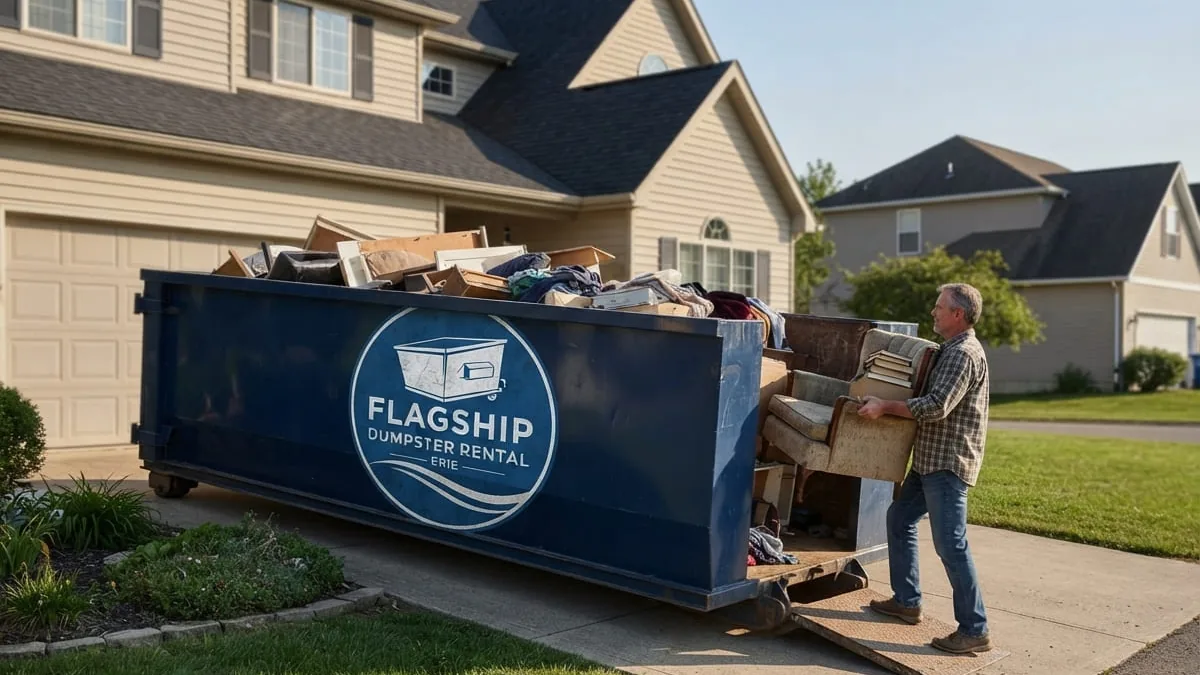
A practical, room-by-room checklist for estate cleanouts in Erie — sorting valuables, setting aside donations, handling hazardous items and electronics, and sizing the right dumpster.
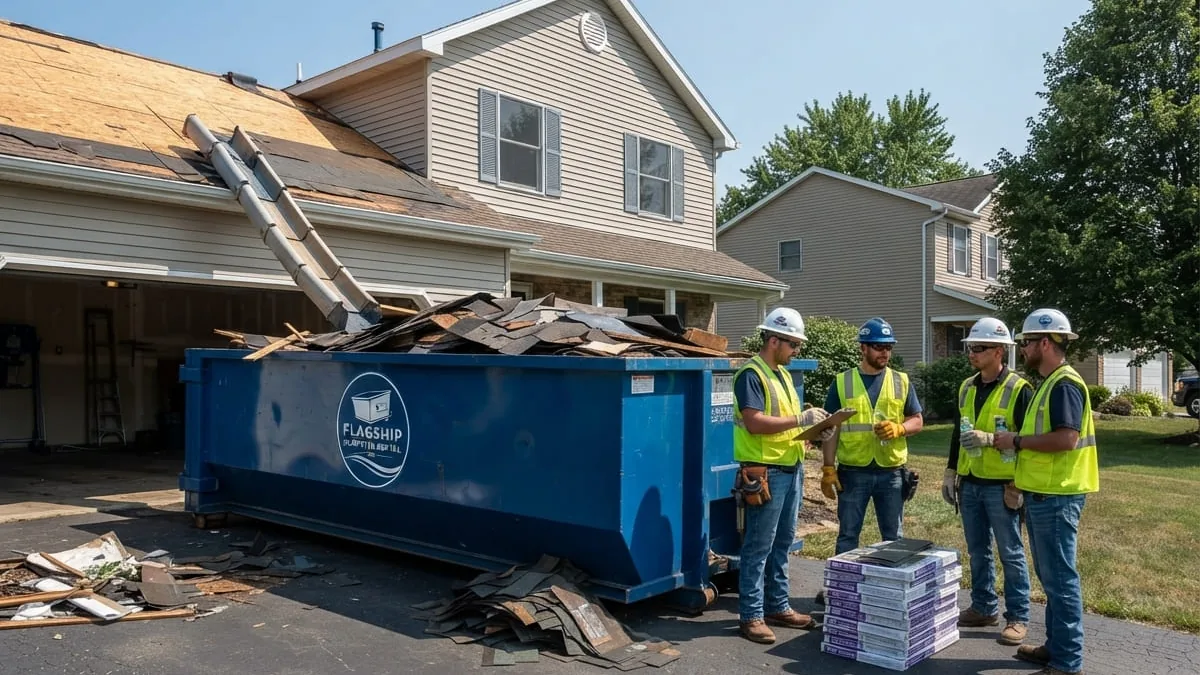
Shingles are heavier than most homeowners expect, and Erie's lake-effect snow load and ice dams keep roofers busy all winter. Here's how to pick the right dumpster size for a tear-off, from a small ranch roof to a multi-layer job.
Erie's lake-effect snow squalls can bury a driveway in hours. Here's how storm and snow-squall cleanup debris removal actually works, and how we schedule around it.