
Do You Need a Permit for a Dumpster in Erie, PA?
A straight answer on dumpster permits in Erie and Erie County — when you're fine on your own property, and when to make a call before we deliver.
Erie dumpster guide
A plain-English rundown of what's allowed in a roll-off dumpster in Pennsylvania and what state law keeps out — electronics, asbestos, yard waste, and more.
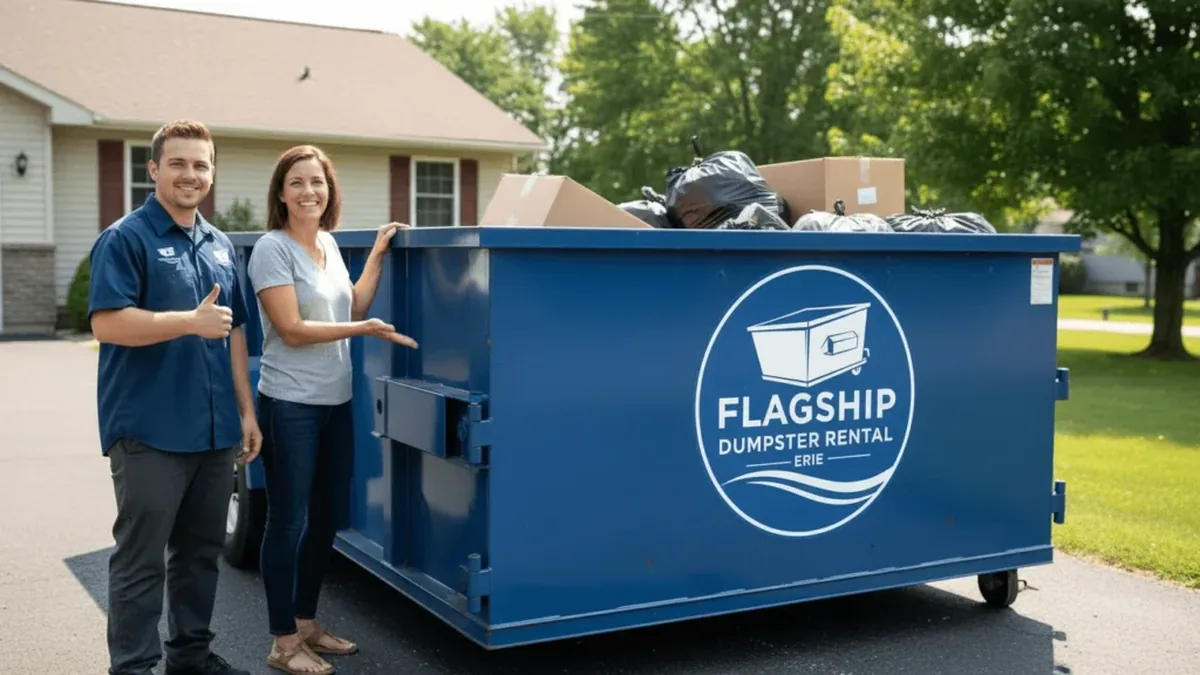
Every week we get some version of the same phone call: “Can I put this in the dumpster or not?” Most of the time the answer is yes — a roll-off container is built to take the bulk of what comes out of a house or job site. But Pennsylvania does draw some hard lines on a handful of items, and getting it wrong can mean a rejected load, a fine, or a truck that gets turned away at the landfill. Here’s what actually goes in the can and what has to be handled a different way, straight from ten years of loading dumpsters across Erie County.
For the vast majority of residential and commercial jobs, a dumpster rental is meant to take general household and construction debris in bulk. That includes:
If you’re gutting a kitchen, clearing out a garage, cleaning up after a storm, or tearing down an old shed, a standard dumpster handles it. When we quote a job over the phone we’ll ask what’s going in so we can put you in the right size — a construction dumpster rental loaded with drywall and lumber weighs very differently than a junk removal load of furniture and boxes, even in the same size can.
Dumpster contents end up at a licensed municipal waste landfill, and Pennsylvania regulates what can legally go into one. A few categories are off-limits everywhere in the state, not just as a company policy of ours:
Pennsylvania’s Covered Device Recycling Act (Act 108 of 2010) has banned computers, monitors, televisions, and similar “covered devices” from landfill disposal statewide since January 24, 2013. This isn’t a vague suggestion — it’s a real, enforced ban, and it applies to old TVs and desktop computers as much as it does to a pallet of office monitors. These need to go to a dedicated electronics recycler instead of the dumpster. Details are on the PA DEP Covered Device Recycling Act page.
Leaves, grass clippings, and similar yard debris are restricted from ordinary landfill disposal under Pennsylvania’s Act 101, and many municipalities run their own separate leaf and yard-waste collection instead. If your job is mostly yard cleanup — branches, brush, a fence line of overgrowth — call us first so we can tell you what our container can and can’t take that trip, or point you to our yard waste service. The state’s general guidance is on the PA DEP Leaf & Yard Waste Reduction page.
None of these belong in an ordinary landfill load, and none of them belong in a dumpster. Tires are typically handled by the tire retailer when you replace them. Lead-acid batteries (car and marine batteries) are usually taken back free by auto parts stores. Used motor oil goes to a collection point, not a container. Paint, solvents, pesticides, and other household chemicals fall under household hazardous waste rules and need a dedicated drop-off, not a roll-off.
This is the one we’re strictest about. Asbestos-containing material — old pipe insulation, certain floor tile and mastic, some plaster and roofing material — cannot go in a standard dumpster under any circumstances. It has to be handled by a licensed abatement contractor who tests, removes, and disposes of it under a completely separate regulatory process. This comes up most often in the older housing stock near downtown Erie and the Bayfront area, where homes built before 1978 can also carry lead-based paint. If you’re renovating a pre-1978 property and you’re not sure what you’re dealing with behind a wall or under a floor, get it tested before demo starts rather than after. We’ll gladly deliver the dumpster for everything else on the job — we just can’t take asbestos in it, and neither can any legitimate hauler.
| Generally allowed | Not allowed in a dumpster |
|---|---|
| Furniture, mattresses, household junk | TVs, computer monitors, and other covered electronics |
| Drywall, plaster, framing lumber | Asbestos-containing material of any kind |
| Roofing shingles and flashing | Tires |
| Flooring — tile, hardwood, laminate | Lead-acid (car/marine) batteries |
| Cabinetry, doors, windows | Motor oil and other automotive fluids |
| Clean, untreated wood scraps | Paint, solvents, pesticides, other household chemicals |
| Concrete, brick, masonry (heavy-debris load) | Large volumes of yard waste (ask about limits first) |
| Non-hazardous general demolition debris | Anything with active fuel, refrigerant, or propane in it (drain/empty first) |
None of this means the job stalls out — it just means a couple of items take a different path. Electronics go to an e-waste recycler. Chemicals, oil, and batteries go to a household hazardous waste collection point. Large-scale yard debris often has a municipal drop-off or curbside program. Asbestos and, where applicable, lead paint go to a licensed abatement contractor before anything else on the job moves forward. For general reference on statewide disposal rules, the PA DEP Recycling & Disposal for Residents page and the PA DEP Disposal Info page are both good starting points, and the EPA’s Pennsylvania resource page covers the federal side.
If you’re not sure which category something falls into, just ask when you call to book. We’d rather answer a five-minute question up front than have a driver find a problem item at the curb in Millcreek, Harborcreek, or anywhere else we deliver in Erie County. Whole-house cleanouts and estate cleanouts in particular tend to turn up a mix of everything — old paint cans in the garage, a dead TV in the basement, a rusted propane tank behind the shed — and it’s a lot easier to sort that out before the container shows up than after it’s full.
Not sure what size you’ll need once you know what’s going in and what isn’t? Take a look at our dumpster sizes page, or just call us at (814) 240-4177 and tell us what you’re working with. We’ve been doing this in Erie since 2016, we own our own trucks and containers, and we’ll give you a flat rate with no surprise fees — and if you call before noon, we can usually get a container to you the same day.
FAQs
No. Pennsylvania’s Covered Device Recycling Act (Act 108 of 2010) has banned TVs, computer monitors, and similar covered electronics from landfill disposal statewide since January 24, 2013. These need to go to a dedicated electronics recycler, not a roll-off dumpster. See the PA DEP Covered Device Recycling Act page for details.
No, never. Asbestos-containing material has to be removed and disposed of by a licensed abatement contractor under a separate regulatory process — it cannot go in a standard dumpster under any circumstances. This is worth checking before you start demo on older homes near downtown Erie and the Bayfront area, where pre-1978 construction can also involve lead-based paint.
In limited amounts, usually yes, but Pennsylvania restricts yard waste from ordinary landfill disposal under Act 101, and many municipalities run separate leaf and yard-waste collection. If your job is mostly yard debris, call us first so we can tell you what our container can take — see the PA DEP Leaf & Yard Waste Reduction page or our yard waste service page.
None of these go in a dumpster. Paint and other household chemicals need a household hazardous waste drop-off, used motor oil goes to a collection point, and lead-acid batteries are usually taken back free by auto parts stores. Tires should go back to a tire retailer rather than into the container.
Yes — drywall, framing lumber, flooring, roofing shingles, cabinetry, and general demolition debris are exactly what a roll-off dumpster is built for. Heavier material like concrete or brick usually needs its own container due to weight limits, so mention it when you call. See our construction dumpster rental and demolition debris pages for more.
Call us and let us know before pickup if you can — we can usually help you sort it out. A prohibited item found at the landfill can mean the load gets rejected or flagged, which slows the whole job down, so it’s always better to pull it out before the container leaves your property.
Ready when you are
Call and you will speak to someone local who knows the streets, the permit rules and which box actually fits your driveway. Flat rate quoted up front.
Keep reading
A straight answer on dumpster permits in Erie and Erie County — when you're fine on your own property, and when to make a call before we deliver.
What actually fills a construction dumpster, how PA DEP rules apply, and how to size your container for every phase of an Erie build — from site prep to final finish.
A practical, room-by-room checklist for estate cleanouts in Erie — sorting valuables, setting aside donations, handling hazardous items and electronics, and sizing the right dumpster.